
SWISS QUALITY5G SHIELDING

About us – Vjekoslav Marković and Conformax

Vjekoslav Marković has been measuring radiation in people’s homes for decades and represents the Swiss brand Conformax. Here we introduce his approach and the key topics from his interviews with the BALKAN INFO channel.

Vjekoslav MarkovićRadiation testing in living spaces · Conformax brand representative
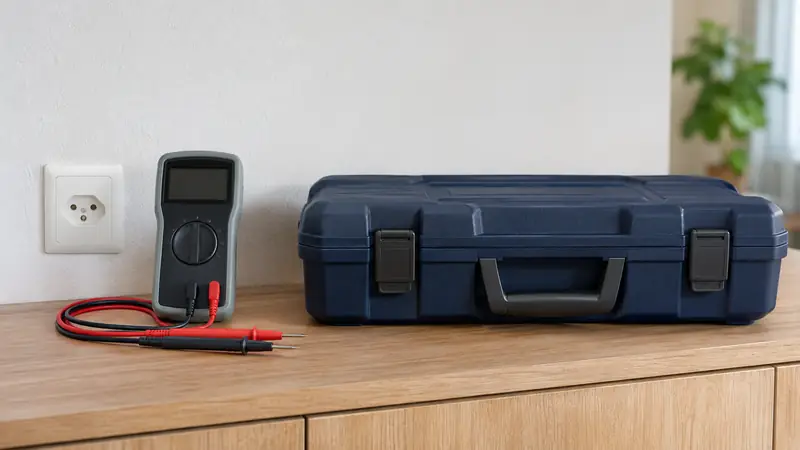
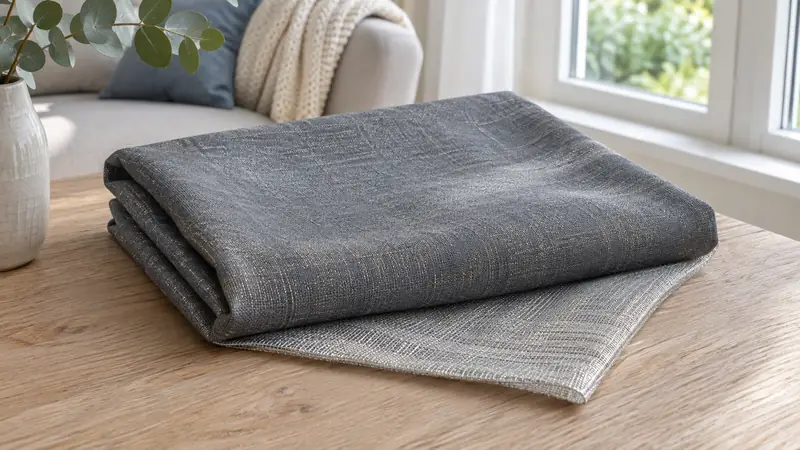
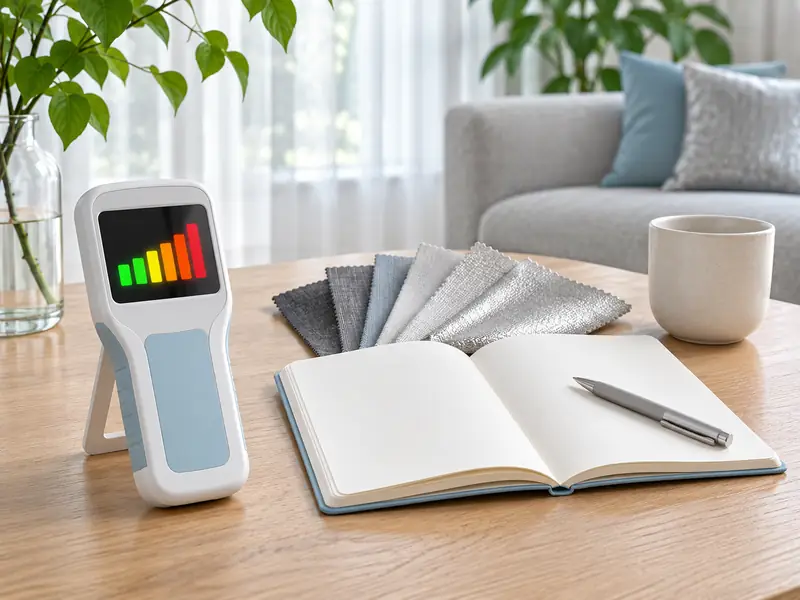
Measuring device and samples of shielding fabric on a table

Vjekoslav Marković comes from Preljina near Čačak and has lived in Switzerland since 1985. He has been testing radiation in homes and workplaces since the late 1980s.

In Switzerland, people call him in to measure radiation in their flats or to survey a plot of land before building a house. After his first appearances on the BALKAN INFO channel, people contacted him from Serbia, Croatia, Slovenia, Italy and Canada; most of his measurements were in Belgrade.

Today he represents Conformax – a Swiss brand of shielding products that a team developed over many years – and is introducing it to Serbia and the wider region. He stresses that he is not a doctor and promises no cures: his work is measuring, explaining the sources and practical protection.

He is happy to pass on what he knows. He offers training in the use of measuring devices to anyone interested because, as he puts it, he cannot be everywhere himself.

Conformax

Registered trademark

Conformax is a registered Swiss trademark of Deltamatic GmbH, Glarus, entered in the register of the Swiss Federal Institute of Intellectual Property (IPI).

Trademark no.
CH 806955
Registered
5 December 2023
Protected until
16 October 2033
Holder
Deltamatic GmbH, Glarus
Classes
20 and 40
Entry in the Swissreg register

How he works

From the interviews

In three interviews with the BALKAN INFO channel (2023–2025), Vjekoslav Marković explained how he measures radiation and what he recommends. These are the key topics, summarised and linked to the relevant part of each video.

Where does radiation in a flat usually come from?

Marković explains that most of the radiation in a flat comes from devices we bring in ourselves: Wi-Fi routers, mobile phones, chargers, extension leads and bedside lamps. In his experience, the router is often right against the wall behind a child’s bed, and a wall does not stop 2.4 GHz high-frequency waves. So he advises checking first what is around the place where you sleep.

Watch this part of the interview
How is radiation measured correctly?

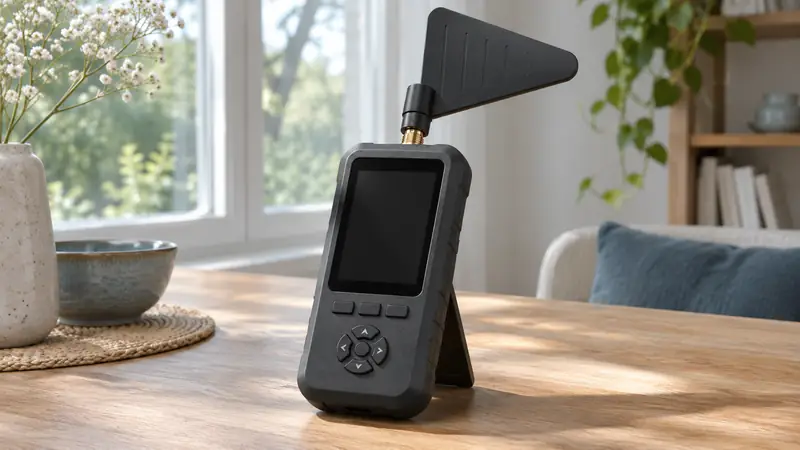
For low-frequency fields from household wiring (50 Hz), Marković uses a simple detector; for high-frequency signals from mobile networks and Wi-Fi, an instrument with a logarithmic antenna. He warns of a common mistake: when a hand or body is between the source and the instrument, the body absorbs part of the field and the device shows less than is actually there. That is why, he says, it matters not only what you measure with but also how.

Watch this part of the interview
How far from the bed should a mobile phone be?

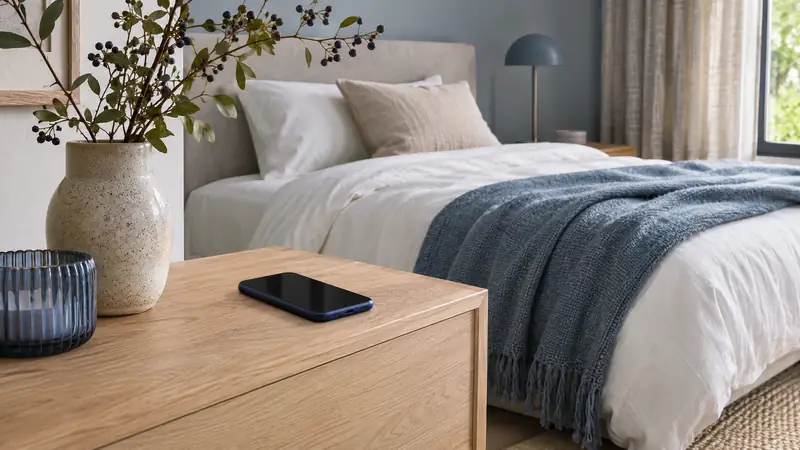
In his experience, the phone should be at least one to one and a half metres from your head – never under the pillow or on the bedside table as an alarm clock. Even at night, a phone keeps up a constant connection with the base station, and it sends its strongest signal the moment a call is set up. Marković therefore advises moving the phone away at that point and talking via the loudspeaker or headphones.

Watch this part of the interview

What about cables, chargers and lamps next to the bed?

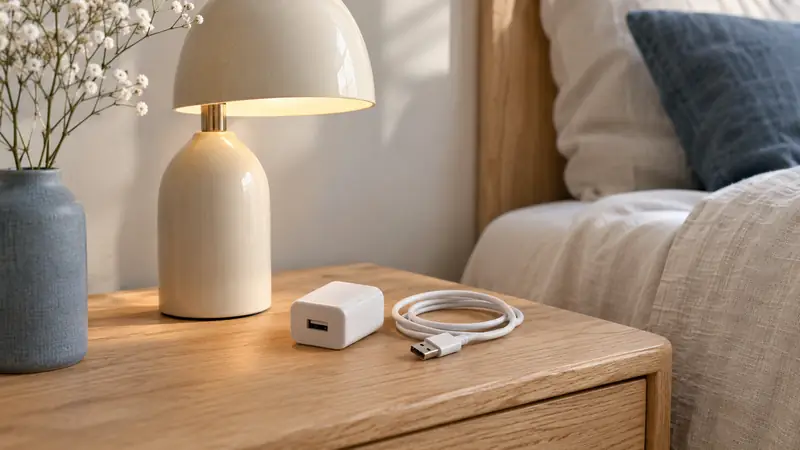
In the programme, Marković shows that even a charger simply plugged into the socket, with no phone attached, produces a measurable low-frequency field. With lamps, the switch often breaks the neutral instead of the live wire, so the cable stays live even when the light is off; sometimes it is enough to turn the plug round in the socket. He advises keeping cables and devices at least half a metre to a metre from the bed.

Watch this part of the interview

Why do earthing and correct wiring matter?

Marković measures the voltages between live, neutral and earth. Between earth and neutral there should be almost nothing; he considers an induced voltage of one to two volts acceptable, but ten volts too much. In the field he has come across swapped live and neutral wires and poor earthing – which, he stresses, must be checked and put right by a qualified electrician.

Watch this part of the interview

What is static charge and how is it discharged?

Static charge builds up through friction, for example when walking on synthetic carpets, and near devices and cables – you feel it as a spark when you touch metal. In the programme, Marković measures the voltage between the body and earth and shows how it drops almost to zero when the shielding underlay is connected to earth. The condition, he says, is that the earth is checked beforehand.

Watch this part of the interview

How can you protect yourself when the source cannot be removed?

For signals coming from outside, such as from base stations, Marković recommends Conformax shielding underlays and covers. In the programme he places a high-frequency meter inside the underlay material and shows how the readings fall almost to zero, then rise again when he takes it out. Even so, he stresses that shielding is no substitute for distance: devices still do not belong next to the bed.

Watch this part of the interview

What does he think of antennas on the roofs of residential buildings?

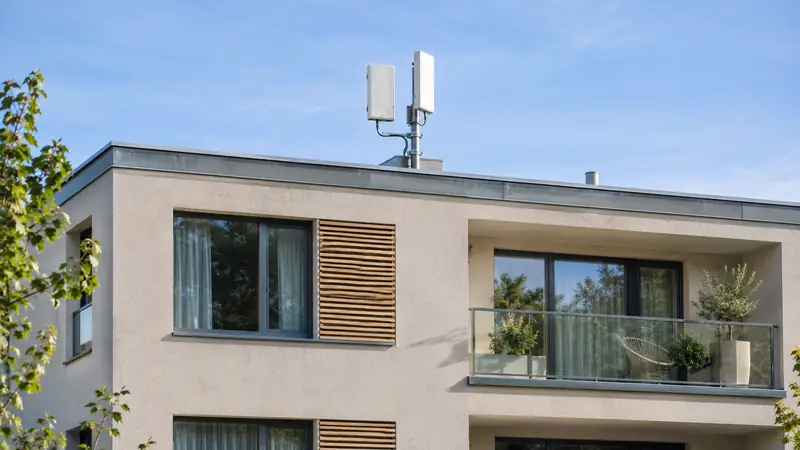
Marković has nothing against the development of telecommunications, but he believes there is a lack of monitoring: field strength should be measured regularly – in milliwatts per square metre or volts per metre – especially in large cities. In his experience, flats directly beneath antennas show markedly high readings, and residents sometimes agree to an antenna being installed in return for being exempted from service charges. His message: when something is offered for free, ask plenty of questions.

Watch this part of the interview

What is his experience with underground water and the position of the bed?

In Marković’s personal conviction, a bed should be placed away from underground watercourses – just as builders once chose the site for a house according to where livestock liked to lie down. He looks for such zones with dowsing rods and, where possible, turns the bed to a north–south direction; if he has to choose, he considers it more important that the bed is not above a watercourse. This is his practical experience, not a scientifically proven method.

Watch this part of the interview

«This is not just talk: take the device, switch it on, measure and show what the readings are.»

— Vjekoslav Marković, Balkan Info

«How radiation is checked is extremely important – so that you can be sure it is really there.»

— Vjekoslav Marković, Balkan Info

«I don’t know everything. When I see that someone knows something better, I am glad to take their advice.»

— Vjekoslav Marković, Balkan Info

«My aim is to teach those who want to work with these devices, so that this knowledge multiplies.»

— Vjekoslav Marković, Balkan Info

These summaries reflect the views and experience of Vjekoslav Marković from interviews with the BALKAN INFO channel and are not medical advice; for health questions, please consult a doctor.

Talk to us

Do you have a question about measuring or shielding in your space? Write to us.

Write to us